1. Choosing Plants Without Considering Growth
Plants rarely stay the size they are at installation. Ignoring mature growth leads to overcrowding, blocked views, and frequent pruning. This issue appears most often in foundation beds and narrow planting zones. Good landscape architecture considers mature size, spacing, sun exposure, and soil health. Proper planning reduces plant stress and supports long-term landscape performance.
2. Skipping a Master Plan
One of the most common residential landscape design mistakes is moving forward without a master plan. Homeowners often install patios, planting beds, or walkways in phases without a cohesive vision. Over time, this approach creates disconnected outdoor spaces. A well-developed plan helps align garden design, circulation, and outdoor living spaces from the start.
3. Focusing on Appearance Instead of Function
A visually appealing landscape still fails if it does not function well. Poor circulation, lack of shade, or awkward patio placement limits daily use. Each outdoor space should have a purpose. Functional residential landscape design considers how people move, gather, and relax outdoors. When form supports function, the landscape becomes part of everyday life.
Common functional elements to evaluate early:
- Walkway width and flow
- Access between indoor and outdoor spaces
- Shade, lighting, and seating placement
4. Overlooking Drainage and Grading
Drainage problems often stay hidden until damage appears. Standing water, erosion, and stressed turf reduce the health of the residential landscape. These issues typically result from poor grading or unmanaged runoff. Addressing drainage early protects both hardscape investments and lawn care efforts. Proper grading allows water to move safely through the site.
Ignoring Maintenance Requirements
Some designs look great on day one but become difficult to maintain. High-maintenance plant palettes, tight planting layouts, and hard-to-reach areas increase long-term care demands. Successful residential landscape planning balances aesthetics with realistic maintenance needs. This approach protects your investment and supports consistent landscape health.
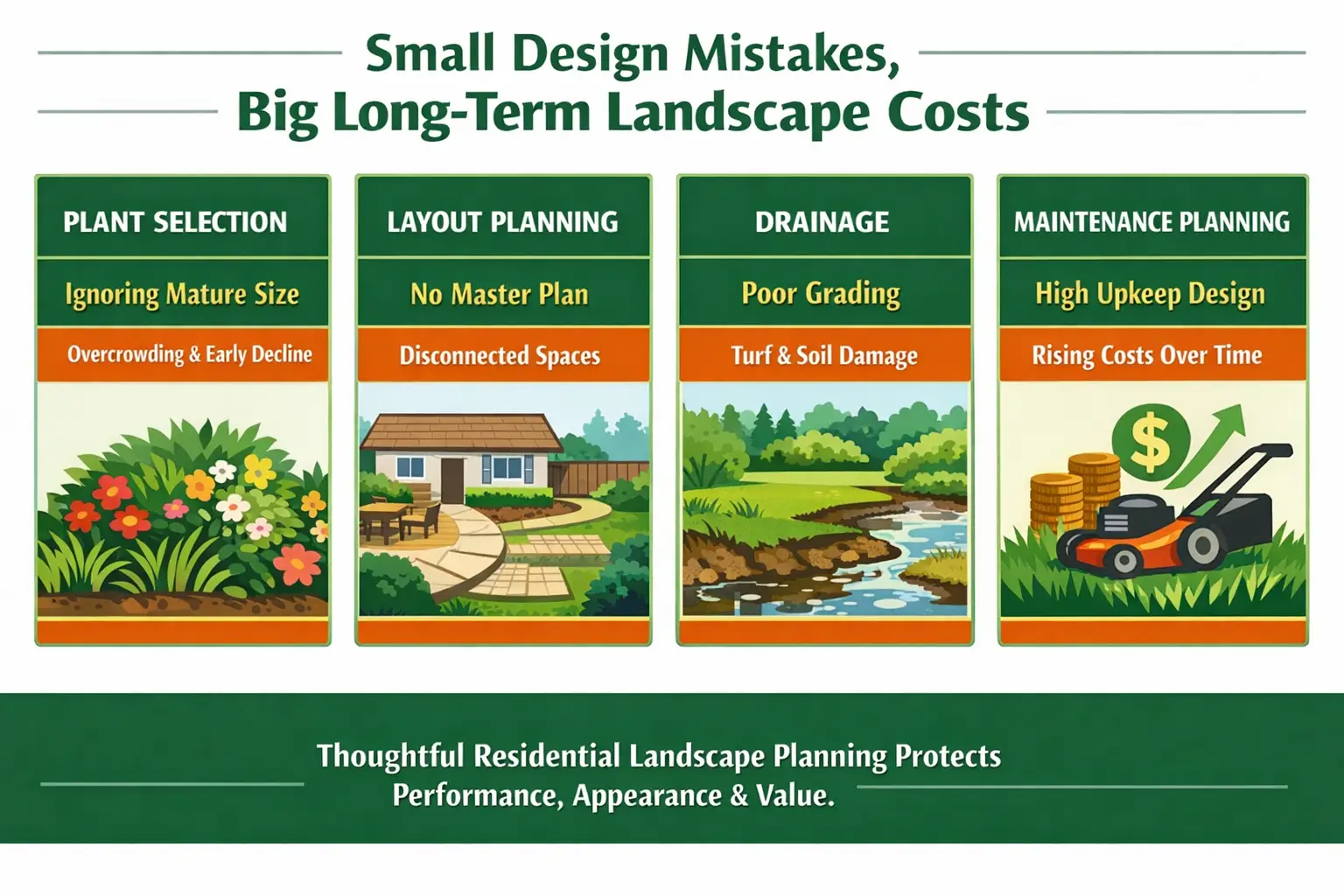
Table: How Planning Impacts Long-Term Results
| Design Decision Area | Common Mistake | Long-Term Impact |
|---|---|---|
| Plant selection | Ignoring mature size | Overcrowding and decline |
| Layout planning | No master plan | Disconnected spaces |
| Drainage | Poor grading | Turf and soil damage |
| Maintenance | High upkeep design | Increased costs over time |
Solution: Creating a More Cohesive Outdoor Plan
Avoiding common residential landscape mistakes starts with thoughtful planning and informed decisions. When design, function, and maintenance align, the landscape performs better over time. A cohesive residential landscape supports daily use while protecting long-term value. With the right approach, outdoor spaces grow stronger and more enjoyable each season.
Frequently Asked Questions
What is the biggest residential landscape design mistake?
Starting without a master plan creates the most long-term issues and added expense.
Can poor design affect lawn health?
Yes. Drainage, grading, and circulation directly impact turf performance and lawn care needs.
When should maintenance be considered in the design process?
Maintenance should guide decisions from the very beginning, not after installation.

