
1. Choosing the Right Patio Materials
Material selection affects durability, maintenance, and long-term performance. Homeowners often choose materials based on appearance alone. This can lead to premature wear, surface damage, or increased upkeep. Climate, drainage, and surrounding landscape conditions should guide material decisions.
Common patio material considerations include slip resistance, heat retention, and long-term maintenance needs. A landscape architect can help align materials with both aesthetic goals and daily use.
2. Planning a Functional Patio Layout
A patio layout should support how the space will actually be used. Poor layouts often limit seating, disrupt circulation, or block access to the home. Clear pathways and defined zones help patios feel comfortable and intentional. Layout planning should consider furniture placement, shade needs, and proximity to entry points.
Patio design works best when it connects seamlessly to the rest of the outdoor environment. Integration with garden design and lawn areas improves flow and usability.
3. Designing for Everyday Use
A patio should support more than occasional entertaining. Daily use requires shade, lighting, and easy access. Overlooking these elements reduces comfort and limits how often the space is used. Functional patios consider sun exposure, wind patterns, and seasonal changes.
Long-term success also depends on how the patio interacts with surrounding lawn care and drainage conditions. Poor grading or runoff issues can affect surface stability and comfort.
4. Avoiding Common Patio Design Mistakes
Many patio issues stem from decisions made early in the design process. Addressing these factors upfront reduces maintenance needs and improves long-term satisfaction.
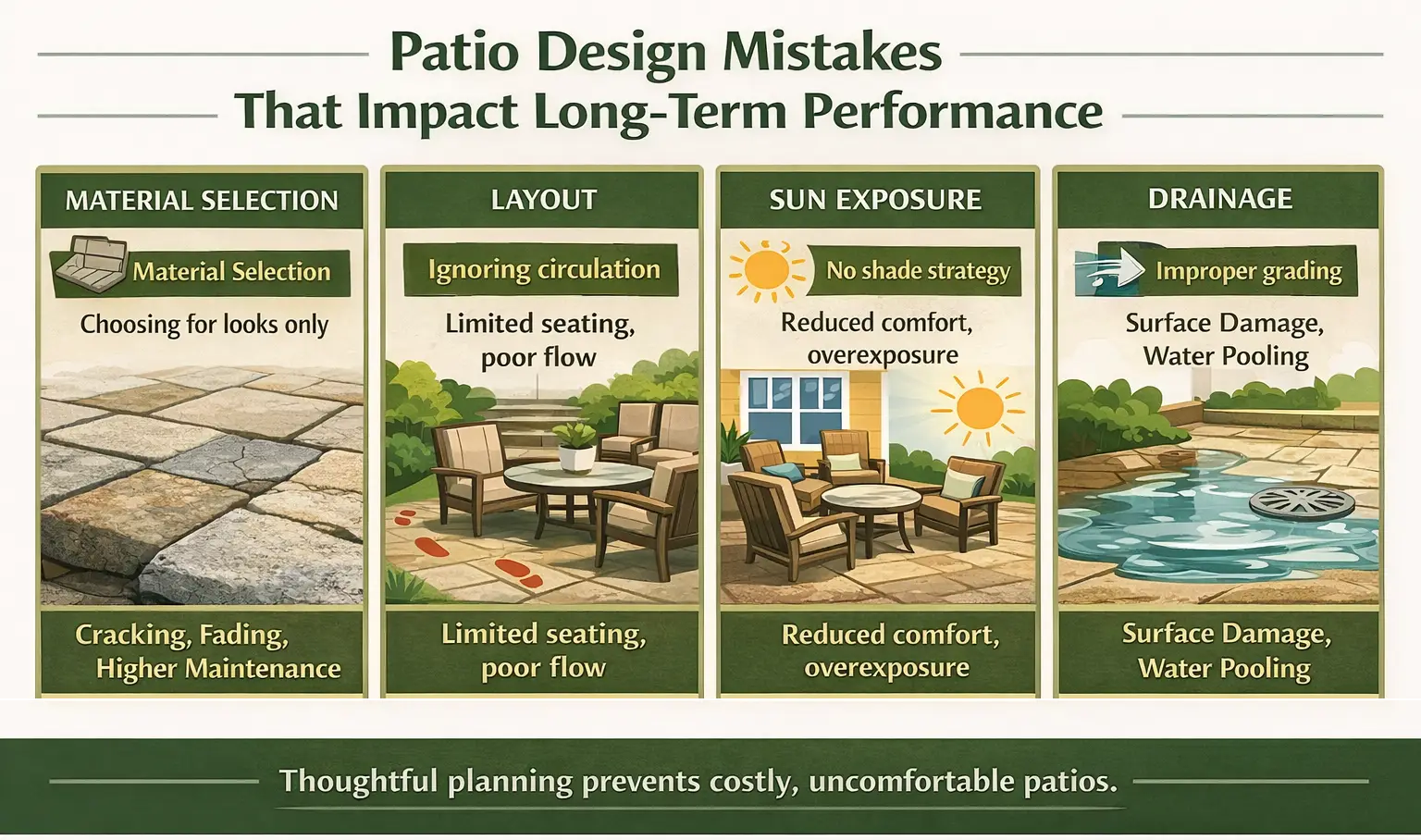
Table: Common Patio Design Mistakes
| Design Decision Area | Common Mistake | Long-Term Impact |
|---|---|---|
| Material selection | Choosing for looks only | Cracking, fading, higher maintenance |
| Layout planning | Ignoring circulation | Limited seating and poor flow |
| Sun exposure | No shade strategy | Reduced comfort and usability |
| Drainage | Improper grading | Surface damage and water pooling |
Focus on Supporting the Surrounding Landscape
A patio should complement the broader residential landscape, not compete with it. Planting design, lawn transitions, and edge detailing all influence how the space feels. Poor integration can make patios feel disconnected or unfinished. Coordinated planning protects both hardscape investments and ongoing lawn care efforts.
Creating a Patio That Lasts
Successful patio design blends materials, layout, and function into one cohesive plan. When each decision supports daily use and long-term care, the patio becomes an enduring part of the residential landscape. Thoughtful planning leads to outdoor spaces that feel comfortable, durable, and well connected to the home, year-round.
Frequently Asked Questions
What is the most important factor in patio design?
Function should guide all decisions, from layout to material selection.
How do I choose the right patio material?
Consider climate, maintenance expectations, and how the patio will be used daily.
Should patio design connect to the rest of the landscape?
Yes. Integrated patio design improves flow, comfort, and long-term value.

