
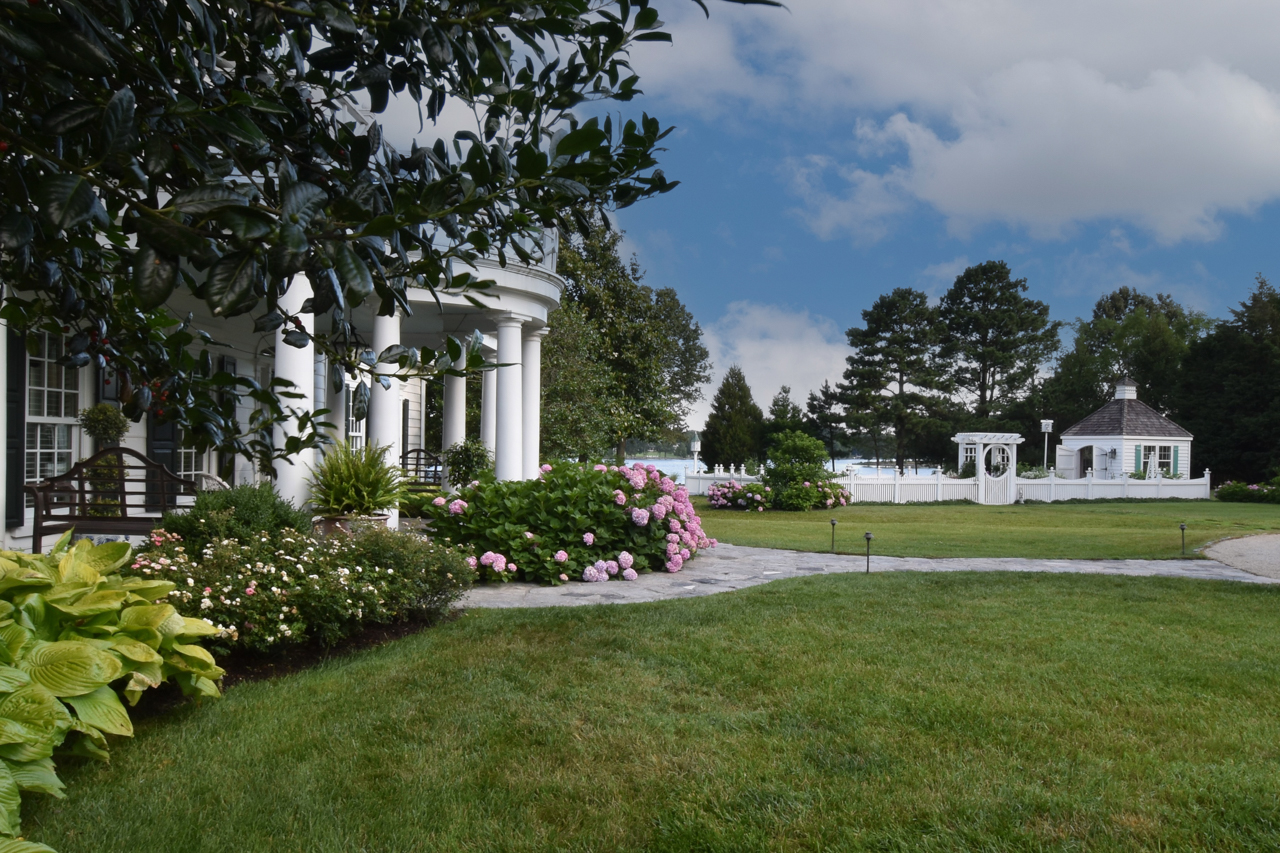
Easton operates at a different pace than the DMV. The properties are different, the regulatory environment is different, and the aesthetic that fits here is genuinely distinct from what works in McLean or Clarksburg. In fact, landscape design on Maryland’s Eastern Shore reflects that difference in almost every decision: plant selection, patio material, and how close a structure can sit to the water’s edge.
McHale has maintained and built on Easton waterfront properties for more than two decades. That experience shapes the way we approach landscape design here. This post covers what makes the Eastern Shore market different and what homeowners planning a project in Easton should understand before they start.
The Eastern Shore Aesthetic
Easton and the surrounding Talbot County landscape has a character that seasoned designers recognize immediately. Properties here tend toward the naturalistic rather than the formal. The relationship between a home and its waterfront is central to everything. Views take precedence. Native plants and natural materials read as appropriate in a way that heavily manicured, high-maintenance landscapes do not.
That aesthetic is not arbitrary. It reflects the site conditions, the regulatory environment, and the culture of the Eastern Shore. Landscapes that feel right here work with the land rather than imposing a suburban template onto a waterfront or agricultural setting. Broad lawns, relaxed planting compositions, native meadow edges, and materials that weather gracefully all fit the Eastern Shore context. By contrast, rigid symmetry, dense ornamental planting, and high-gloss hardscape generally do not.
For homeowners coming from Northern Virginia or suburban Maryland, this is sometimes an adjustment. The design vocabulary that felt right at a McLean property may feel out of place on a Tred Avon River lot. Understanding that difference from the beginning leads to better design decisions and a landscape that feels genuinely at home on its site.
Waterfront Setbacks and Critical Area Regulations
Most Easton properties near the water fall within Maryland’s Critical Area — the same 1,000-foot tidal buffer zone that governs waterfront properties in Annapolis. Talbot County runs its own Critical Area program in coordination with state requirements. As a result, local standards carry the same weight as Anne Arundel County’s program further west.
For landscape design, that means the 100-foot buffer adjacent to tidal water restricts clearing, grading, impervious surface, and new structures. Additionally, projects that add hard surfaces anywhere on the property trigger impervious surface calculations that may require mitigation. Buffer restoration plantings are often part of the permitting package when projects disturb vegetation within the regulated zone.
McHale’s experience with Critical Area design and permitting extends to Talbot County. The regulatory framework is similar to Annapolis, but local reviewers and local precedent differ. Working with a team that has submitted and managed Critical Area applications in this specific jurisdiction matters for project timelines and outcomes.
Tidal Soils and Site Conditions
Eastern Shore soils near the water share characteristics with Annapolis waterfront soils: hydric or near-hydric profiles, poor drainage, seasonal saturation, and sensitivity to compaction. Beyond those shared conditions, Easton properties often sit on soils with higher organic matter content than upland sites. That difference affects how hardscape bases perform and how plant roots establish over time.
Salt tolerance is a genuine design constraint on properties close to tidal water. Wind-driven salt spray damages sensitive plant material and accelerates corrosion on metal components. Consequently, species selection must account for actual exposure conditions, not just sun and moisture. Plants that thrive ten miles inland may struggle on a Tred Avon waterfront. Specifying material that performs here requires direct Eastern Shore experience, not just general Mid-Atlantic knowledge.
For hardscape, the same principles that apply in Annapolis hold in Easton: proper base depth, drainage aggregate beneath paved surfaces, and material selection that accounts for wet-dry cycles and freeze-thaw stress. Bluestone, natural stone, and permeable paver systems tend to perform better on these sites than materials with tighter installation tolerances.
Garden Design on Eastern Shore Properties
Planting design in Easton rewards a naturalistic approach. Native species adapted to the Chesapeake watershed perform reliably in tidal soils, tolerate the moisture and salt exposure common near the water, and satisfy Critical Area mitigation requirements when buffer plantings are part of the project scope.
A well-composed garden on an Eastern Shore property typically layers evergreen structure, deciduous canopy, and seasonal perennial interest without relying on the dense ornamental plantings that suit a more formal DMV property. Bald cypress, river birch, Virginia sweetspire, inkberry, and native grasses all fit the Eastern Shore palette well. They establish with less maintenance pressure than exotic ornamentals and improve over time as they colonize the site naturally.
Meadow edges and naturalistic lawn transitions are increasingly common on Easton properties where homeowners want to reduce mowing frequency in low-use zones while maintaining a polished appearance near the house. Designing those transitions thoughtfully is a specific skill. Done well, the naturalistic areas read as intentional rather than neglected, and that distinction makes a significant difference in the finished result.
Outdoor Living and Patio Design in Easton
Outdoor living on Eastern Shore properties centers on the water. Orientation, view corridors, and connection to the shoreline drive almost every design decision about where a patio, dining area, or fire feature sits relative to the house.
Because many Easton properties have generous lot depth between the house and the water, there is often an opportunity to create a sequence of outdoor spaces at different distances from the shore. Consider the layering: a terrace directly off the house for everyday use, a lower lawn or deck closer to the water for entertaining, and a shoreline edge planted for erosion control and habitat. Each zone serves a different purpose. Together, they create the layered outdoor experience that distinguishes a designed landscape from a standard builder finish.
Outdoor living elements on Easton properties tend toward the relaxed end of the spectrum: generous seating areas, fire features that extend the season into cool Eastern Shore evenings, and outdoor kitchens scaled for the way waterfront homeowners actually entertain. Covered structures like loggias and screened porches are particularly well-suited to this climate. They provide shade in summer and protection from the wind and insects that come with waterfront living.
Materials choice matters more on exposed waterfront sites. Fabrics, furniture, and finish materials that hold up in a McLean backyard may degrade quickly in the salt air and UV exposure of an Easton waterfront. Specifying materials rated for coastal exposure from the start avoids early replacement costs.
Landscape Maintenance on Eastern Shore Properties
Waterfront properties require more maintenance attention than inland sites, not less. Salt spray, wind exposure, moisture stress, and the aggressive growth that comes with fertile tidal soils all mean the landscape needs consistent care to stay ahead of problems.
McHale has provided landscape maintenance on Easton waterfront properties since 2000, including the Easton Waterfront Estate — one of our longest continuous client relationships. Over that time, we have built direct knowledge of how these properties perform across seasons and what they require to stay at their best.
For homeowners considering a new landscape project in Easton, building a maintenance plan into the project from the beginning produces better long-term results than treating it as a separate decision. Plants installed with a realistic maintenance budget perform better than plants installed without one.
Working with McHale on an Easton Project
McHale’s Easton office at 29459 Pintail Drive serves Talbot County and the broader Eastern Shore market. Our team has direct experience with Talbot County Critical Area permitting, Eastern Shore soil conditions, and the design vocabulary that fits this market. That local knowledge matters most on projects where site conditions and regulatory requirements diverge from the DMV norm.
If you are planning a landscape project on an Easton or Eastern Shore property, start with a site assessment that takes the waterfront conditions, regulatory context, and site-specific constraints seriously. Contact McHale’s Easton office to begin that conversation.

