
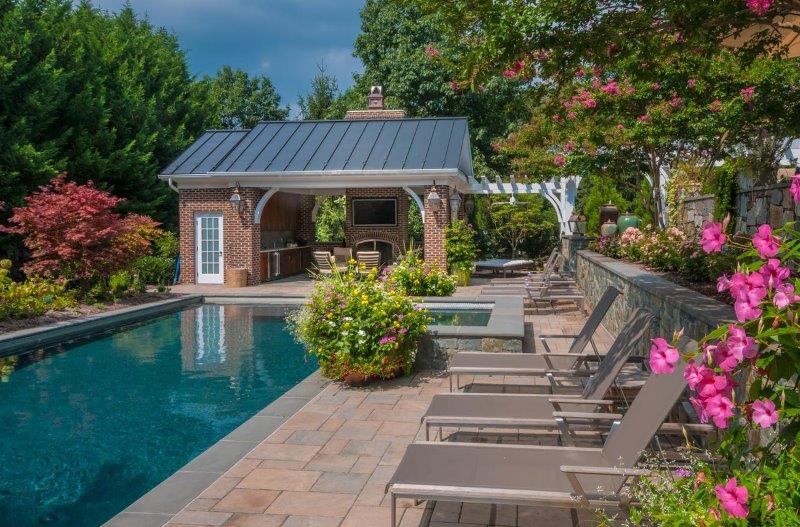
A homeowner off Bradley Boulevard in Bethesda calls me last spring, furious, because a wall somebody built for her was already leaning after one wet winter. She hired a “landscape designer architect,” her words, off a website. The difference between a landscape designer and a landscape architect is licensure: a licensed landscape architect has passed a state board exam and can be legally accountable for site engineering, grading, and certain structural work, while a designer typically focuses on planting, layout, and the look of a space without that license. On her job, nobody ran real grading numbers. Nobody pulled the county requirements. So the wall moved.
That’s the short version. The long version has a lot more mud in it.
What a Landscape Architect Actually Does
A licensed landscape architect handles the technical spine of a project: grading plans, drainage design, stormwater compliance, and coordination with civil engineers when the site needs it. Planting is part of it, sure. But the license exists because moving dirt around near a house is a way to cause real damage, and somebody has to be accountable for the math.
Here in Maryland the license means something the marketing word “designer” doesn’t. When Prince George’s County DPIE wants a stormwater management plan that actually holds up, a landscape architect understands what they’re asking for. When Montgomery County DEP starts in on the tree protection ordinance, you want somebody who has argued that fight before. I’ll say it plainly: a title with the word “architect” floating in it, absent an actual license, tells you nothing.
What a Landscape Designer Brings to the Table
A landscape designer specializes in the creative and horticultural side: plant selection, spatial layout, the feel of an outdoor room, how a terrace relates to the back of the house. Good ones are worth their weight. Some of the best plantsmen we’ve ever worked with never sat for the licensing exam and never needed to.
The design half of the job isn’t lesser work. It’s different work.
A designer who knows Maryland clay, who knows that inkberry sulks in the wrong spot and that Patuxent Nursery was out of it AGAIN this past June, that person saves you money and heartbreak. The problem is only when a design gets sold as engineering. Pretty plan, no grading behind it, and you’re back to the Bradley Boulevard wall.
Do You Actually Need Both on One Job?
Whether you need a designer, a licensed landscape architect, or both depends entirely on the scope and your jurisdiction. Many residential projects run fine with just one. A planting refresh and a modest patio? A strong designer covers it.
A hillside terrace with retaining walls holding back real load? Now you want licensed eyes, and in a lot of cases a professional engineer’s involvement too.
At our design-build studios we keep both skill sets in the building because our projects tend to sprawl into everything at once.
That’s a McHale Landscape Design thing, born of the kind of work we take. It isn’t a universal rule that every backyard needs a licensed landscape architect and a designer stapled together. Anybody who tells you that is selling you something.
The Stamp Question Nobody Explains Right
An LA stamp is not a magic key that every reviewer accepts for every drawing. This is where I’ve seen this backfire on people. In many Maryland jurisdictions, specific structural elements, certain retaining walls above a threshold height, for instance, require a professional engineer’s stamp, not solely a landscape architect’s. The LA does the site design and the planting and the layout. The PE signs off on the wall that’s holding back eleven feet of hillside.
I had a job in Potomac off River Road, big grade change, where we needed both stamps. The homeowner thought I was padding the bill. I was not. The county wasn’t going to accept anything less, and honestly, neither was I, because that wall was going to sit above a pool.
Key Skill Sets for Residential Outdoor Living Projects
The skill that matters most on a residential outdoor living project is grading and drainage, and it matters more than the plant palette and the paver brand put together. Get water moving away from the house correctly and everything downstream of that decision works. Botch it and you’re chasing a wet basement for years.
Everything else is real but secondary. Masonry craft, carpentry for pergolas and pavilions, lighting design, irrigation that doesn’t drown a bed. On our crews the masons and the plant installers and the grading guys all answer to one schedule, which is the only way I’ve found to keep a wall plumb and a bed alive at the same time. Coordination is the whole game.
When Should You Hire a Landscape Architect for Your Property?
Hire a landscape architect the moment your project involves meaningful grade changes, retaining walls, stormwater compliance, or any structure the county wants engineered. Those are the triggers. A flat lot getting new beds and a small sitting area rarely needs one.
Anne Arundel County’s critical area regulations near the water will pull you into licensed territory fast. So will Prince George’s stormwater management on anything that adds real impervious surface. You know what kills me? Homeowners who find out about the Watts Branch watershed requirements after the concrete’s poured. The permitting exhaustion on those is real, and I’ve aged years inside it.
Anyway. If somebody’s quoting you a big hardscape with a straight face and hasn’t mentioned drainage once, walk.
Landscape Designer vs Landscape Architect by the Numbers
McHale Landscape Design has been sorting out which skill set a job needs since 1981, when brothers Kevin and Steve McHale started the company. We run six locations now and employ a large team of people across Maryland, Virginia, and Washington, DC. Three of those locations are dedicated landscape architecture design studios, in Annapolis, McLean, and Easton.
Our headquarters sits on Leapley Road in Upper Marlboro, Maryland, and the family-owned firm keeps a private nursery running that has saved more than one job when a supplier came up short. Project scope on residential work runs enormously wide, from small jobs measured in a few weeks to large estate transformations that take eight months or more of coordinated build. The reason we carry both licensed landscape architects and designers under one roof is that spread. A firm doing only patios doesn’t need the range. We do.
The Real Cost Driver Nobody Warns You About
Cost on a landscape project scales with grade, structure, and whatever’s buried that you didn’t know about. Site conditions eat budgets. A Chevy Chase job back in 2019 still bothers me: we opened up a slope for a terrace and found old fill nobody documented, half of it construction debris from some previous era, and the removal and proper structural backfill added serious cost before we set a single stone.
The design fee itself, whether you’re paying a designer for a planting plan or an LA for a full master plan with revisions, is usually the small part of a real project. The dirt is where the money goes. Anybody quoting you a clean number before they’ve dug a test hole on a sloped lot is guessing. Get a current quote after somebody actually walks the site.
Defining Your Vision Through Professional Design Collaboration
The best outcomes come from a designer and, where scope demands it, a licensed landscape architect working the same plan from the start rather than bolting engineering onto a finished drawing. When the person choosing the plants and the person running the grading numbers are talking early, the terrace elevation matches the drainage, and the drainage matches the planting depths.
That collaboration is exactly the drainage problem from earlier at a different scale: a patio is just a flat surface that has to shed water like everything else, and if the design and the site engineering weren’t married up front, water finds the low spot you didn’t plan for. I don’t care how gorgeous the rendering is. If the two halves of the job never talked, the site will tell on them.
We build master plans that phase over several years for exactly this reason, so the vision and the engineering grow up together instead of fighting later.
One Last Job, and Then Call Steve
A Potomac homeowner last year had a slope nobody wanted to touch, three feet of fall across a patio footprint, and two other firms had quoted her a flat terrace that would’ve pooled water against her foundation by the second storm. We regraded, ran the wall past a PE where the county required it, and the thing has shed water clean through two wet seasons.
If you’ve got a slope, a wet basement, or a wall that’s already moving, call the McHale Landscape Design shop in Upper Marlboro, Maryland, and ask for a site and drainage assessment before anybody draws a pretty picture.
By Kevin McHale, President
Kevin McHale, along with his brother Steve, founded McHale Landscape Design in 1981 upon graduation from West Virginia University. Kevin is President of McHale Landscape Design and has served on the University of Maryland Landscape Advisory Board, The Penn St Landscape Advisory Board and as LCA President in 1996 and again in 2006. Kevin was recognized by the LCA last year with the Landscape Leadership Award which is presented to landscape professionals who have shown exceptional leadership and have positively impacted the landscape industry. McHale Landscape Design is a “Residential Design Build/Estate Gardening Firm” serving the Washington DC market including Northern Virginia, Maryland and the Eastern Shore of Maryland. The company operates 6 locations throughout the region and also maintains a 50 Acre Nursery which caters only to the McHale client base. The firm has won over 400 local and national Landscape Awards. The McHale business model focuses on the “Single Source” philosophy and the company employs “In House” carpentry and masonry crews to assure the clients experience is exceptionally seamless.
Frequently Asked Questions
Is a landscape designer the same as a landscape architect?
A landscape designer and a landscape architect are not the same. A licensed landscape architect has passed a state board examination, holds a government-issued license, and can legally take professional responsibility for site engineering, grading plans, drainage design, and stormwater compliance. A landscape designer typically focuses on planting selection, spatial layout, and aesthetic planning without that license. The distinction matters most when a project involves structural work, significant grade changes, or county permit requirements that name licensure specifically.
Do I need a licensed landscape architect for a retaining wall in Maryland?
Whether you need a licensed landscape architect for a retaining wall in Maryland depends primarily on wall height and jurisdiction. Many Maryland counties require a professional engineer’s stamp, not just a landscape architect’s, for retaining walls above a certain height threshold. A landscape architect handles site design, grading, and layout, while a PE must sign off on the structural engineering for walls holding significant load. In jurisdictions like Montgomery and Prince George’s counties, both credentials may be required on the same project.
When does a residential landscaping project require permits in Maryland?
A residential landscaping project in Maryland typically triggers permitting the moment it adds meaningful impervious surface, alters drainage, or includes retaining walls above county-set thresholds. Prince George’s County requires stormwater management plans for projects that increase impervious cover past specific limits. Properties in Anne Arundel County near the Chesapeake Bay fall under critical area regulations that activate permit requirements quickly. Projects in watersheds like Watts Branch carry additional review layers. The safest approach is to check with the relevant county agency, such as Prince George’s DPIE or Montgomery County DEP, before any grading or construction begins.
Can a landscape designer handle a project that involves grading and drainage?
A landscape designer can develop planting plans and layout concepts, but grading and drainage work that carries structural or compliance consequences generally requires a licensed landscape architect or, in some cases, a professional engineer. Grading that directs water toward a foundation or that must meet a county stormwater ordinance is not within the legal scope of an unlicensed designer. Hiring an unlicensed professional for that work can result in failed inspections, county enforcement, and physical damage to the property if the calculations are wrong.

