
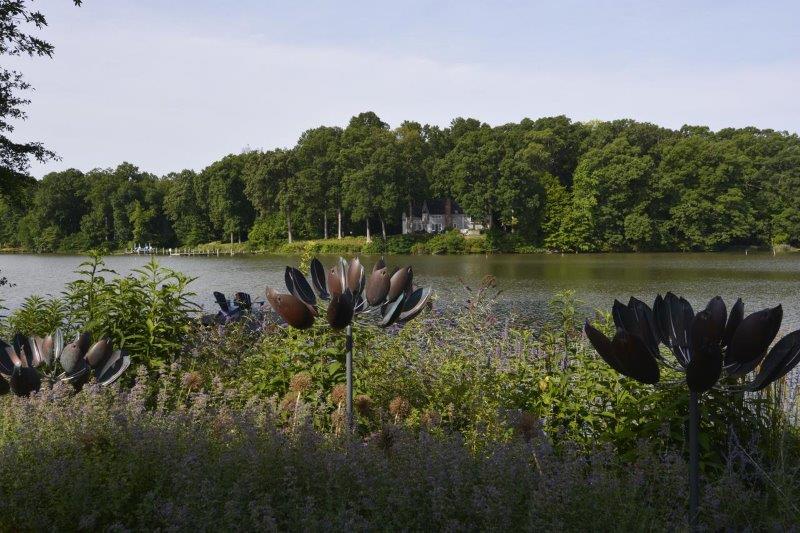
Annapolis is one of the most demanding places in the Mid-Atlantic to design a landscape. That is also what makes it one of the most rewarding.
The properties here are exceptional. Waterfront lots on the Severn River, South River, and Chesapeake Bay tributaries. Mature tree canopies over historic in-town parcels. Elevated ridge sites with water views that took decades to establish. The setting is genuinely remarkable.
But designing a landscape in Annapolis requires more than good taste and a planting plan. It requires technical fluency in a regulatory environment that governs what can be built, where it can go, and what must be preserved. Most landscape firms in the region do not have that fluency. A licensed landscape architect with Annapolis-specific experience does.
Here is what that experience actually means on a project.
The Critical Area Is Not a Footnote
Maryland’s Critical Area Law applies to all land within 1,000 feet of tidal water and tidal wetlands. For most Annapolis waterfront properties, that means the entire lot falls within the Critical Area boundary.
The law exists to protect Chesapeake Bay water quality. It does that by limiting development intensity, controlling impervious surface, preserving natural buffers, and requiring mitigation when those buffers are disturbed. Anne Arundel County administers local permitting through its Critical Area program, and its requirements layer on top of the state baseline.
For a landscape architect, the Critical Area is not a constraint to work around. It is a design parameter to work within from the first site assessment. That means understanding the property’s resource conservation, limited development, or intensely developed area designation — each carries different permitted uses and buffer requirements. Calculating existing impervious coverage happens before adding a single square foot of patio. Stormwater mitigation gets designed into the landscape when hard surfaces increase runoff beyond permitted thresholds.
A homeowner who hires a designer unfamiliar with these rules may end up with a beautiful plan that cannot be permitted. Or worse, a project that gets built, triggers a compliance notice, and requires costly remediation after the fact.
What a Landscape Architect Does That a Designer Cannot
The distinction matters in Annapolis more than in most markets. A landscape architect is a licensed professional with the training and legal authority to seal permit drawings. A landscape designer lacks that authority.
Many Annapolis waterfront projects require stamped drawings before Anne Arundel County will issue a grading permit, a Critical Area permit, or both. Retaining walls over a certain height. Structures within the 100-foot buffer. Projects that trigger stormwater management review. In these cases, a landscape designer simply cannot advance the project — a licensed landscape architect must.
Beyond permitting, the scope of a landscape architect’s work is broader. Site analysis covers grading, drainage patterns, soil conditions, and structural considerations that a planting-focused designer does not address. On Annapolis properties, that depth matters considerably. Tidal influence affects soil saturation at depths that change how and where hardscape can be built. Steep slopes toward the water create grading challenges that require engineering judgment, not just aesthetic sensibility.
McHale’s design-build approach keeps the landscape architect in the process from initial concept through final installation. The design does not get handed off to a separate contractor who may interpret it differently. The same team that created the grading plan oversees the grading work. That continuity matters on complex Annapolis sites where field conditions routinely diverge from what a plan shows.
Tidal Soils and What They Mean for Your Project
Properties within the Chesapeake watershed often sit on soils that are hydric, poorly drained, or subject to seasonal saturation. These are not the dense, stable soils common to inland suburban lots. Unlike upland soils, tidal-influenced ground compresses under load differently, drains slowly, and supports a different palette of plant material than a generic nursery list would suggest.
For hardscape, this affects foundation depth and base specification for patios, walls, and walkways. Shallow bases that work fine on a McLean property can heave and settle in the wet-dry cycles of an Annapolis waterfront lot. Proper base depth and drainage aggregate beneath hardscape surfaces are essential on these sites, not optional.
For planting, tidal soils affect species selection fundamentally. Plants installed in saturated conditions without accounting for that saturation will underperform and often die. As a result, the landscape architect’s role includes identifying the drainage characteristics of each planting zone and specifying species that will actually perform — not just what photographs well at installation.
Native species adapted to the Chesapeake watershed are often the right answer. Plants native to the Mid-Atlantic coastal plain evolved in exactly these conditions. They tolerate wet feet, salt exposure, and nutrient-poor tidal soils that would stress ornamental species quickly. They also satisfy Critical Area mitigation requirements and support local wildlife habitat, which some county programs actively incentivize.
The Buffer: What It Restricts and What It Enables
The 100-foot Critical Area buffer is the zone where most Annapolis landscape conflicts occur. State law restricts clearing, grading, and impervious surface within this area. New structures are not permitted. Existing vegetation receives protection.
That sounds like a design dead zone. It is not.
A well-designed buffer is a genuine landscape asset. The right plant selection within that zone creates a layered, naturalistic screen that provides privacy from the water, habitat for migratory birds and pollinators, and erosion control at the water’s edge. Done well, it looks intentional rather than like a compliance afterthought.
McHale has designed within Critical Area buffers on properties throughout the Annapolis market. That work includes buffer restoration plantings that satisfy regulatory requirements, native meadow installations that reduce mowing pressure in low-use zones, and shoreline stabilization plantings that replace failing rip-rap with a more ecologically functional solution.
Projects that treat the buffer as a design zone rather than a line on a survey consistently produce better outcomes than those that design up to the buffer edge and stop.
Permits, Timelines, and What to Expect
Permitting an Annapolis landscape project takes longer than permitting the same scope in a non-Critical Area jurisdiction. Homeowners who have done projects in Clarksburg or McLean are often surprised by the difference.
A project that triggers Critical Area review in Anne Arundel County may require a pre-application meeting with county planning staff, a formal Critical Area permit application, and a stormwater management review — all before a grading permit is issued. Depending on project complexity and county workload, that process can take several months.
Starting the design process early is not optional on these projects. Early engagement is the difference between breaking ground in the desired construction window and losing a full season.
An experienced landscape architect who works regularly with Anne Arundel County reviewers knows what documentation is required, what triggers additional review, and how to structure an application efficiently. That knowledge has real value. It compresses timelines and reduces the risk of surprises mid-review.
What McHale Brings to Annapolis Landscape Architecture
McHale has designed and built landscapes in the Annapolis market for years. Over that time, we have developed ongoing working relationships with Anne Arundel County permitting staff, a portfolio of Critical Area projects that demonstrates regulatory compliance alongside design quality, and a team that has encountered the site conditions, drainage challenges, and soil types specific to this market repeatedly — not once.
Our Annapolis work spans waterfront estates on the Severn River, in-town properties near the historic district, and ridge sites overlooking the Bay. Each project carries its own constraints. Each has produced a landscape the homeowner actively uses and values.
If you are planning a landscape project on an Annapolis property — whether starting from scratch or reworking an existing design — the right first step is a site assessment with someone who understands what this market requires. Contactar con McHale to start that conversation.
Frequently Asked Questions
Do I need a landscape architect for my Annapolis waterfront property?
If your project involves grading, retaining walls over 30 inches, structures within the Critical Area buffer, or any work that triggers a stormwater management review, Anne Arundel County will require stamped drawings from a licensed landscape architect. Even for projects below those thresholds, a landscape architect brings site analysis and regulatory knowledge that a landscape designer does not.
What is Maryland’s Critical Area and how does it affect my landscape project?
Maryland’s Critical Area Law designates all land within 1,000 feet of tidal water as subject to development restrictions intended to protect Chesapeake Bay water quality. In Annapolis, most waterfront and near-waterfront properties fall within this zone. Restrictions govern impervious surface limits, buffer vegetation, grading, and stormwater management. Any landscape project on a Critical Area property should involve a designer with specific experience navigating Anne Arundel County’s local program.
How long does it take to permit a landscape project in Annapolis?
Projects that require Critical Area review can take several months to permit, depending on scope and county workload. This timeline is longer than in non-Critical Area jurisdictions. Beginning the design and permitting process well before your desired construction window is essential for Annapolis waterfront projects.
Can I add a patio or outdoor structure within the 100-foot Critical Area buffer?
Generally, no. The Critical Area buffer prohibits new impervious surface, clearing, grading, and structures within 100 feet of tidal water. Limited exceptions and variance processes exist through Anne Arundel County, but these are project-specific and not guaranteed. A landscape architect with Critical Area permitting experience can advise on what is feasible for your specific property.

